
CRE-450 · Lesson 3 of 12 · 29 min
Child creator, performer and privacy law in Canada
Lesson 2 set out the ethics of featuring children in content. This lesson turns to the law. In Canada there is not yet a statute written specifically for child influencers or family vloggers, unlike several US states. Instead, a patchwork of existing laws applies: federal and provincial privacy law, Quebec's civil code and consumer protection law, provincial employment standards and child performer rules, the general law of privacy and negligence, and the Criminal Code. Calls for specific protections have grown since 2024, with commentators and some legislators pointing to the US laws, so check for new provincial legislation before relying on this summary.
No child influencer statute yet
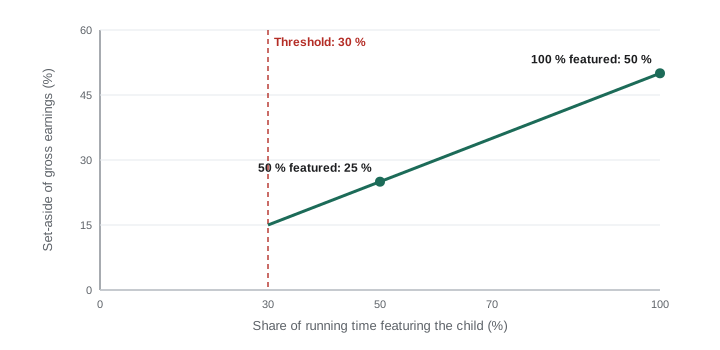
As of October 2026, no Canadian province or the federal government has passed a law like Illinois's 2024 child influencer law, which requires a share of a child's earnings from family content to go into a trust. Children who appear in family content therefore usually have no specific statutory right to a share of the income they help generate, unless they are hired under a contract covered by child performer rules. This gap is a key reason responsible Canadian creators set up voluntary savings or trust arrangements for children who appear regularly, as later sections describe.
| Law | What it covers | Relevance to family content |
|---|---|---|
| PIPEDA | Federal privacy law for personal information in commercial activity | Applies to monetized channels collecting or using children's personal information; meaningful consent required |
| Quebec Private Sector Act (as amended by Law 25) | Privacy in Quebec's private sector | Information about a child under 14 generally needs consent from a parent or guardian; de-indexing rights |
| Civil Code of Québec, arts. 3, 35 and 36 | Rights to privacy, reputation and one's image | Using a person's image or name without consent can be an invasion of privacy |
| Quebec Consumer Protection Act, ss. 248 and 249 | Commercial advertising directed at children under 13 | Generally prohibited in Quebec, affecting sponsored content aimed at children |
| Ontario Protecting Child Performers Act, 2015 | Children engaged as performers in the entertainment industry | Hours, breaks, chaperones and set-aside rules for contracted performers; reach to family vlogs is uncertain |
| Provincial employment standards | Minimum ages and conditions for child employment | May apply when children are hired, for example by brands or production companies |
Privacy law: PIPEDA and the provinces
The Personal Information Protection and Electronic Documents Act (PIPEDA) applies to organizations that collect, use or disclose personal information in the course of commercial activities. A monetized channel is a commercial activity, so a creator's handling of personal information, including children's images and details, can fall under it, although the line between a family's personal life and its business is not always clear. The Office of the Privacy Commissioner of Canada has said that meaningful consent is required and that, for children under 13, consent should generally come from a parent or guardian, while recognizing that this does not override the child's own interests. Alberta and British Columbia have their own private-sector privacy laws with similar principles.
Worked problem
Applying Quebec's age-14 consent rule
A Montreal creator wants to feature a 12-year-old niece and a 15-year-old nephew in sponsored videos and to collect their first names and ages for a giveaway entry list. Whose consent does Quebec privacy law generally require for the personal information?
Show solution
- Under Quebec's private-sector privacy law, personal information about a minor under 14 generally may not be collected without the consent of the person having parental authority, unless collection is clearly for the minor's benefit.
- The 12-year-old is under 14, so the parent's or guardian's consent is needed.
- The 15-year-old can generally consent personally, but responsible practice still involves the parents and the teen.
- Separately, the Civil Code protects both children's images, and the Consumer Protection Act restricts advertising aimed at children under 13, which may affect the sponsored content itself.
Answer: Parental consent for the 12-year-old; the 15-year-old's own consent, ideally with parental involvement. The advertising rules raise a further question about the sponsored videos.
Quebec: civil code, consumer protection and Law 25
Quebec has the strongest protections in Canada. The Civil Code of Québec recognizes a right to privacy and to one's image; using someone's image or name without consent can be an invasion of privacy, and the Supreme Court of Canada's 1998 Aubry decision confirmed that publishing an identifiable photo of a person without consent can be actionable even when taken in public. Quebec's Consumer Protection Act, sections 248 and 249, generally prohibits commercial advertising directed at children under 13, judged by the nature of the product, the way the message is presented and when and where it appears. Law 25, phased in from 2022 to 2024, updated the private-sector privacy law, including the rule that personal information about a minor under 14 generally requires the consent of a parent or guardian, and a right in some circumstances to have information de-indexed.
Taken together, these Quebec rules mean a creator in Quebec who features children needs informed parental consent, a clear purpose for any personal information, care with sponsored content that could be seen as advertising to children, and respect for requests to remove images. Other provinces rely more on general privacy law and the developing common-law privacy torts, such as intrusion upon seclusion recognized in Ontario in Jones v. Tsige (2012).
Child performer and employment rules
Children hired to perform in the traditional entertainment industry are protected by provincial rules. Ontario's Protecting Child Performers Act, 2015 sets limits on hours, requires breaks, chaperones and tutoring for school-age children, and requires part of a child performer's income to be set aside for the child. It applies to engagers in the live and recorded entertainment industry, and whether it reaches family vlogs made by parents is uncertain; it is more likely to apply when a brand or production company engages a child. British Columbia's Employment Standards Regulation has specific rules for children in recorded entertainment, and other provinces set minimum ages and permit requirements for child employment. A brand hiring a child for a sponsored video should check the rules in the province where filming happens.
Worked problem
Estimating a voluntary savings plan
A Canadian family channel earns $9,000 a month. The children appear in about 50 % of the content. Although no Canadian law requires it, the parents decide to follow the Illinois approach voluntarily, setting aside half the percentage of time featured. How much goes into the children's savings each month and each year?
Show solution
- Set-aside percentage: half of 50 % = 25 %.
- Monthly amount: \( 0.25 \times 9{,}000 = 2{,}250 \).
- Yearly: \( 2{,}250 \times 12 = 27{,}000 \).
- Options include an in-trust account or a formal trust; a lawyer and an accountant can advise on tax treatment and control.
Answer: About $2,250 a month, or $27,000 a year. Following a US benchmark voluntarily shows good faith and protects the children's interests while Canadian law catches up.
The Criminal Code and reporting
The Criminal Code sets absolute limits. It prohibits making, distributing, possessing or accessing child sexual abuse material (section 163.1) and luring a child online. Creators who discover that their content is being misused, for example reposted on exploitative sites or collected with sexualized comments, can report it to Cybertip.ca, Canada's national tipline run by the Canadian Centre for Child Protection, which also runs NeedHelpNow.ca to help young people get sexual images of themselves removed. Several provinces also require anyone who encounters child sexual abuse material to report it. Lesson 5 covers practical steps to reduce these risks.
Where a creator learns that a child shown in their content is at risk of abuse, provincial child protection laws require reporting to a child welfare agency, and in most provinces this duty applies to everyone, not only professionals.
Practical compliance steps
- Get informed parental consent in writing for any child who is not your own, and seek the child's assent.
- Collect only the personal information you need about children, and avoid collecting any from children under 13 without a parent.
- In Quebec, check sponsored content against the rules on advertising to children under 13.
- Set aside part of children's earnings voluntarily, using a lawyer and accountant to choose a structure.
- Commit in writing to remove content when a child asks, and report any misuse of children's images to the national tipline.
How Canadian courts think about children's privacy
Canadian courts have increasingly recognized privacy as a value deserving protection, particularly for children. In a 2012 decision about a cyberbullying victim who wanted to proceed anonymously, the Supreme Court of Canada recognized that children are inherently vulnerable and that their privacy deserves special protection online, allowing the young person to use initials. Lower courts have also considered parents' online posting about children in family disputes, sometimes ordering a parent to remove posts or stop posting about a child where it was not in the child's best interests. These cases do not create a child influencer regime, but they show that courts take children's online privacy seriously and that a parent's control over a child's image is not unlimited.
Recent public attention has also focused on whether Canada should follow the US approach. Commentators have pointed out that a child who appears in hundreds of monetized videos in Canada has no specific statutory claim to the income, and that federal privacy reform, which stalled when Bill C-27 died in January 2025, did not address the issue directly. Watch for provincial bills, particularly in provinces with existing child performer laws, and for guidance from privacy commissioners.
Worked problem
Comparing a Canadian child's position with an Illinois child's
Two family channels each earn $100,000 a year from content in which a child appears 60 % of the time. One is in Ontario, the other in Illinois. How much would each child be entitled to in a year under statute, and what does that suggest for the Ontario family?
Show solution
- Illinois: half of 60 % = 30 %; \( 0.30 \times 100{,}000 = 30{,}000 \) a year.
- Ontario: no statute requires a set-aside for family content, so the statutory entitlement is $0 unless child performer rules apply to a particular engagement.
- A voluntary set-aside of 30 % would put the Ontario child in the same position.
Answer: The Illinois child is entitled to about $30,000 a year; the Ontario child to nothing under statute. Matching the Illinois benchmark voluntarily is a strong ethical choice and may anticipate future law.
Finally, remember that many Canadian creators have large US audiences and work with US brands. A US brand contract may require compliance with US laws, such as Coogan deposits, even for a Canadian child, and US state laws may be argued to apply to content produced elsewhere if it is monetized there. Clarify in contracts which law governs and what is required.
Common mistakes
MistakeAssuming no law applies because Canada has no child influencer statute.
InsteadPrivacy law, Quebec's civil code and consumer law, employment rules and the Criminal Code all apply.
MistakeCollecting information about children under 14 in Quebec without parental consent.
InsteadGet consent from a parent or guardian unless collection is clearly for the child's benefit.
MistakeRunning sponsored content aimed at young children in Quebec without checking the advertising rules.
InsteadCheck sections 248 and 249 of the Consumer Protection Act before targeting children under 13.
MistakeTreating a child's earnings as household income with no set-aside.
InsteadSet aside a share voluntarily in a structure that protects the child.
MistakeIgnoring misuse of children's images.
InsteadReport to Cybertip.ca and remove the content.
Summary and key terms
- Canada has no child influencer statute yet; existing privacy, civil, consumer, employment and criminal law apply.
- PIPEDA requires meaningful consent, generally from a parent for children under 13.
- In Quebec, information about a child under 14 generally needs parental consent under Law 25.
- Quebec's Civil Code protects image and privacy, and its consumer law bans most advertising aimed at children under 13.
- Ontario's Protecting Child Performers Act covers contracted performers; its reach to family vlogs is uncertain.
- The Criminal Code prohibits child sexual abuse material; misuse can be reported to Cybertip.ca.
- Voluntary set-asides, consent records and removal commitments are good practice everywhere.
- PIPEDA
- Canada's federal private-sector privacy law.
- Law 25
- Quebec law that modernized its privacy rules between 2022 and 2024.
- Coogan account
- A blocked trust account holding part of a child performer's earnings until adulthood.
- Set-aside
- The share of earnings that must be saved for a child.
- COPPA
- The US Children's Online Privacy Protection Act.
- Verifiable parental consent
- Consent from a parent obtained in a way that reasonably confirms it is the parent.
- Child performer
- A minor engaged to perform in entertainment, often protected by specific laws.
- Qualifying content
- Paid content that meets a child influencer law's threshold.
- Cybertip.ca
- Canada's national tipline for reporting online sexual exploitation of children.
- CyberTipline
- The US national reporting system for child sexual exploitation, run by NCMEC.
Practice problems
Work each problem on paper first, then reveal the answer to check.
Does Canada have a child influencer statute?
Show answer
No; general privacy, civil, consumer, employment and criminal law apply.
In Quebec, at what age can a minor generally consent to collection of their personal information?
Show answer
14.
Which Quebec law restricts advertising to children under 13?
Show answer
The Consumer Protection Act, sections 248 and 249.
Which Supreme Court case confirmed image rights in Quebec?
Show answer
Aubry v. Éditions Vice-Versa (1998).
A channel earns $6,000 a month; children appear 40 % of the time. Voluntary Illinois-style set-aside?
Show answer
Half of 40 % = 20 %; $1,200 a month.
Which Ontario law covers child performers?
Show answer
The Protecting Child Performers Act, 2015.
Where can misuse of children's images be reported in Canada?
Show answer
Cybertip.ca.
Which privacy tort did Ontario recognize in Jones v. Tsige?
Show answer
Intrusion upon seclusion.
Name one step a Quebec creator should take before featuring a niece aged 11.
Show answer
Get the parent's or guardian's consent.
Name one good practice that applies everywhere.
Show answer
Voluntary set-asides, written consent, removal commitments or reporting misuse.
Lesson quiz · 5 questions
Score 60% or more to complete this lesson.
Create a free account to save your progress, take quizzes and earn a certificate.