
VIS-130 · Lesson 11 of 12 · 28 min
Contemporary, Indigenous and digital art
The art of the last half-century is too varied to fit a single story. Artists work in every medium, from paint and photography to installation, video, performance, data and artificial intelligence. Many of the most important voices come from communities that the traditional canon excluded, including Indigenous artists who draw on traditions thousands of years old while responding to colonial histories and contemporary life. This lesson looks at a selection of these developments most relevant to image makers: national landscape traditions and their critics, Indigenous art in Canada and the United States, the protocols for respectful engagement with Indigenous imagery, large-scale photography and video art, and the debates around digital and AI-generated images.
Revisiting the national landscape
Lesson 5 showed how nineteenth-century landscape painting was bound up with national identity. In the twentieth century, these traditions continued and were challenged.
The Group of Seven, who first exhibited together in Toronto in 1920, set out to paint a distinctly Canadian landscape in bold colour and simplified forms: lakes, rocks and windswept pines of the Canadian Shield, and later the Rockies and the Arctic. Tom Thomson, whose paintings of Algonquin Park inspired the group, died in 1917 before it formed. Their images became national icons, reproduced on stamps, coins and posters. Emily Carr, working on the West Coast, painted the forests of British Columbia and the carved poles of Haida, Kwakwaka'wakw and other First Nations villages from the early 1900s to the 1940s, in works of great intensity.
Later critics pointed out that the Group of Seven typically showed the North as an empty wilderness, overlooking the Indigenous nations whose territories they painted and the logging, mining and railways reshaping the land. Carr's paintings of carved poles, made with deep admiration, also reflected an assumption, common at the time, that Indigenous cultures were vanishing, at a moment when the Canadian government was actively suppressing them, including through the potlatch ban in force from 1885 to 1951. Today, galleries present these works alongside Indigenous perspectives on the same lands.
Indigenous art: continuity and innovation
Indigenous art in North America is not a single tradition but the art of hundreds of distinct nations, each with its own visual languages, materials and protocols. Contemporary Indigenous artists work in every medium, often combining customary forms with contemporary practice and addressing colonization, land, language, identity and survival.
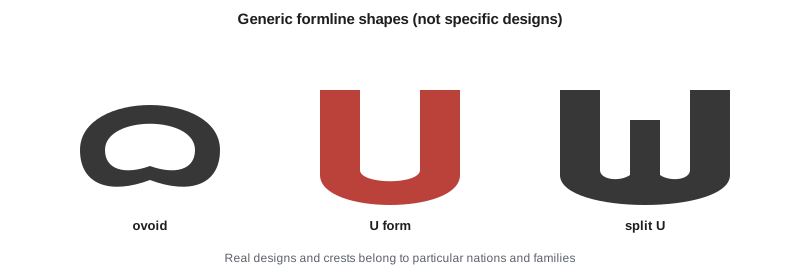
Several Canadian traditions have had a profound influence on visual culture. On the Northwest Coast, formline design, the flowing, swelling lines and characteristic ovoid and U shapes used in Haida, Tlingit, Tsimshian and other art, organizes images of crest animals on poles, boxes, blankets and prints. The Haida artist Bill Reid, who died in 1998, revived and transformed these forms in large sculptures.
In Kinngait, then known as Cape Dorset, in what is now Nunavut, Inuit artists began making prints in the late 1950s with the encouragement of the artist James Houston, launching annual print collections from 1959. Kenojuak Ashevak's print The Enchanted Owl, from 1960, became one of the most famous Canadian images. The studio, now known as Kinngait Studios, remains one of the longest-running printmaking studios in the world, and contemporary Inuit artists such as Annie Pootoogook, whose drawings of everyday life in Kinngait won the Sobey Art Award in 2006, expanded its subjects.
In Ontario, the Anishinaabe artist Norval Morrisseau, who held his first major exhibition in Toronto in 1962, developed a style known as Woodland or Legend painting, with bold black outlines and bright colours depicting spiritual beings and teachings, sometimes called x-ray style because it shows inner lines of connection. In 1973, Morrisseau, Daphne Odjig, Alex Janvier and others formed the Professional Native Indian Artists Inc., often called the Indian Group of Seven, to demand recognition from galleries that had treated Indigenous art as craft.
Contemporary artists continue to reshape Canadian art. Kent Monkman, of Cree ancestry, paints large canvases in the style of nineteenth-century history and landscape painting featuring his gender-fluid alter ego, Miss Chief Eagle Testickle, to rewrite colonial narratives with humour and anger. In 2019, he created two monumental paintings for the Great Hall of the Metropolitan Museum of Art in New York. Rebecca Belmore, an Anishinaabe artist, makes performance and installation works addressing violence and land; she represented Canada at the Venice Biennale in 2005.
Protocols and respect: cultural appropriation
Indigenous imagery has often been copied without permission, from souvenir trinkets and sports logos to fashion and stock graphics. Cultural appropriation describes taking elements of a culture, especially a marginalized one, without understanding, permission or benefit to its people, in ways that can distort meanings, sacred contexts or ownership. Many Indigenous designs are not public decorations but belong to particular families, clans or nations, with rules about who may use them.
| Principle | What it means in practice |
|---|---|
| Permission | ask the community or rights holders before using designs, stories or sacred images |
| Attribution | name the nation and artist accurately, not generic labels |
| Benefit | ensure fair payment and benefit flow to artists and communities |
| Context | understand meaning and avoid using sacred or ceremonial imagery decoratively |
| Collaboration | involve Indigenous creators as partners, not only as subjects |
| Authenticity | avoid marketing non-Indigenous products as Indigenous-made |
In Canada, the Igloo Tag trademark, created by the federal government in 1958 and now managed by the Inuit Art Foundation, certifies authentic Inuit art. Many arts funders and institutions, including the Canada Council for the Arts, publish guidance on respecting Indigenous cultural protocols, and the government has committed to implementing the United Nations Declaration on the Rights of Indigenous Peoples through federal legislation passed in 2021.
Worked problem
Planning a respectful photo series
A photography student wants to make a series about a powwow and to use traditional regalia in a fashion-style shoot afterwards. Using the principles in this lesson, outline a respectful approach.
Show solution
- Research and contact: learn about the specific nation and event, contact organizers in advance and ask about photography rules, which often prohibit images during certain ceremonies.
- Seek consent: ask individual dancers for permission before photographing them, and explain how images will be used.
- Reconsider the fashion shoot: regalia is often personal, sacred and made by family members; do not borrow or imitate it as costume. Instead, propose a collaboration led by Indigenous participants if they wish.
- Share benefit and credit: name participants and their nations accurately, share images, and discuss compensation or support for the community.
Answer: Contact organizers first and follow their photography rules, ask dancers individually for consent and explain the use, drop the idea of using regalia as fashion costume unless Indigenous participants lead a collaboration on their own terms, and credit and share the work with the people and nations involved.
Contemporary photography and video art
Since the 1970s, photography and video have become central to contemporary art. Large-scale colour photographs, often printed several metres wide and sometimes staged like paintings, rival history painting in scale and ambition. German photographers trained by Bernd and Hilla Becher, who photographed industrial structures in neutral, grid-like series, made monumental images of buildings, crowds and landscapes.
Vancouver became internationally known for photo-conceptual art. Jeff Wall's large backlit transparencies, from the late 1970s onward, stage scenes of everyday life that echo historical paintings, such as a photograph restaging a Japanese print in a windy field near Vancouver. Stan Douglas makes photographs and films reconstructing historical moments, and Edward Burtynsky, from Ontario, photographs industrial landscapes such as quarries, mines and oil fields at vast scale, raising questions about environmental change; his images have been presented in large exhibitions and documentaries.
Video art began in the 1960s, when portable video equipment allowed artists such as Nam June Paik to manipulate television images. Today, multi-screen installations, projection mapping and immersive environments draw on cinema's techniques but place viewers in galleries, public spaces and virtual worlds.
Digital art and artificial intelligence
Digital tools have transformed image making, from digital photography and editing to 3D rendering, generative art made with code, and images produced by AI systems trained on vast collections of existing images. Early computer artists in the 1960s, such as Vera Molnár, used plotters and simple programs to explore systematic variation. Today, artists such as Refik Anadol create large data-driven installations; his work Unsupervised, which used a machine learning model trained on MoMA's collection, was shown at the museum in 2022 and 2023.
AI image generation has raised intense debates. Many artists object that their work was used to train systems without consent or payment. Courts and copyright offices are deciding whether AI-generated images can be protected, and whether training on copyrighted images is lawful. The guidance changes quickly, so check current sources.
In Canada, the Copyright Act does not specifically address AI-generated works, and the government has consulted on AI and copyright. A registration listing an AI system as a co-author of an image was issued by the Canadian copyright office in 2021 and is being challenged in Federal Court by the Samuelson-Glushko Canadian Internet Policy and Public Interest Clinic (CIPPIC), so the question of AI authorship remains unsettled at the time of writing (October 2026).
For image makers, art history offers useful perspective. Each new technology, from the camera obscura and photography to photomontage and digital editing, provoked fears about the end of art and debates about skill, authorship and authenticity. Those debates were resolved partly through law and partly through artists discovering what the new tool did best. The same process is now unfolding with AI.
Worked problem
Dating a work from stylistic evidence
You find an unlabelled image described as follows: a large colour photograph, about 2 by 3 metres, mounted on a lightbox, showing a staged scene of people in a city park in deliberate poses that recall a nineteenth-century painting. Estimate when it was likely made and explain your reasoning.
Show solution
- Large backlit colour transparencies became a recognized art form from the late 1970s, notably in Vancouver photo-conceptual art.
- Monumental colour photography in galleries became widespread from the 1980s onward.
- Staged scenes referencing art history are characteristic of contemporary photography from the late 1970s to the present.
- The lightbox format declined somewhat as large inkjet prints became dominant in the 2000s, though artists still use it.
Answer: The work was most likely made between the late 1970s and the early 2000s, because large backlit colour transparencies of staged scenes that quote historical paintings are characteristic of photo-conceptual art from that period. Further evidence, such as printing technology or the clothing in the scene, could narrow the date.
What image makers take from contemporary art
Contemporary art shows that every medium, including photography, video, installation, code and AI, can carry serious artistic ideas. Revisiting national landscapes teaches that images of land carry histories of who is included and excluded. Indigenous artists demonstrate continuity and innovation, and their protocols teach respect, permission, attribution and shared benefit. Large-scale and staged photography connect directly to painting's history. And AI debates echo earlier controversies about photography and montage, reminding you to understand both the law and the ethics of the tools you use.
Common mistakes
MistakeTreating Indigenous art as a single style
InsteadRecognize the distinct traditions of hundreds of nations, each with its own visual languages and protocols
MistakeUsing Indigenous designs as decoration because they are visually striking
InsteadSeek permission, understand meaning, credit accurately and share benefit, or create original work instead
MistakeViewing national landscape icons uncritically
InsteadAsk whose land is shown and who is left out, as critics of the Group of Seven and Western landscape imagery have done
MistakeAssuming AI-generated images are automatically protected by copyright
InsteadCheck current law; in the US, purely AI-generated material lacks human authorship, and Canadian law is unsettled
MistakeTreating contemporary photography as separate from art history
InsteadObserve how staged and large-scale photographs quote and transform historical painting
Summary and key terms
- Twentieth-century national landscape icons are now reconsidered for what they omitted, including Indigenous presence.
- Indigenous art comprises many distinct traditions, from Northwest Coast formline and Inuit printmaking to Woodland painting and Pueblo pottery.
- Contemporary Indigenous artists combine customary forms with contemporary media to address colonization, land and identity.
- Respectful engagement requires permission, accurate attribution, context, collaboration and fair benefit.
- Large-scale staged photography and video art connect contemporary practice to painting's history.
- Digital and AI art raise new debates about consent, authorship and copyright that echo earlier controversies about photography.
- Laws on Indigenous art authenticity and AI copyright differ between Canada and the United States and continue to change.
- Formline
- The flowing, swelling line system used in Northwest Coast Indigenous design
- Woodland School
- A style of painting founded by Norval Morrisseau with bold outlines and spiritual imagery
- Cultural appropriation
- Taking elements of a culture without understanding, permission or benefit to its people
- Protocol
- Customary rules governing who may use designs, stories and images, and how
- Photo-conceptual art
- Art using photography to explore ideas, often staged and large-scale, associated with Vancouver
- Video art
- Art using video technology, from the 1960s onward
- Generative art
- Art produced using systems, code or rules that generate variations
- Human authorship
- The requirement, in US copyright law, that protected works be created by humans
- Harlem Renaissance
- A flowering of African American art, literature and music in the 1920s and 1930s
- Repatriation
- The return of cultural items and ancestral remains to Indigenous communities
Practice problems
Work each problem on paper first, then reveal the answer to check.
Name one criticism of national landscape painting in the twentieth century.
Show answer
It often showed the land as empty wilderness, overlooking Indigenous presence and industrial use.
What is formline design?
Show answer
A system of flowing, swelling lines and shapes such as ovoids and U forms used in Northwest Coast art.
Name one Indigenous artist from this lesson and their medium.
Show answer
Examples include Kenojuak Ashevak, printmaking; Norval Morrisseau, painting; Wendy Red Star, photography.
What are three principles of respectful engagement with Indigenous imagery?
Show answer
Permission, accurate attribution and fair benefit; also context, collaboration and authenticity.
Why should regalia not be used as fashion costume?
Show answer
It is often personal, sacred and family-made, with protocols governing its use.
What law protects the authenticity of Native-made goods in the US?
Show answer
The Indian Arts and Crafts Act of 1990.
What certifies authentic Inuit art in Canada?
Show answer
The Igloo Tag trademark, managed by the Inuit Art Foundation.
Name a contemporary photographer who stages scenes referring to painting.
Show answer
Examples include Jeff Wall, Carrie Mae Weems or Wendy Red Star.
What is the US Copyright Office's position on purely AI-generated images?
Show answer
They cannot be registered because they lack human authorship.
How does art history help in thinking about AI images?
Show answer
It shows that earlier technologies provoked similar debates about authorship and skill before artists found their best uses.
Lesson quiz · 5 questions
Score 60% or more to complete this lesson.
Create a free account to save your progress, take quizzes and earn a certificate.