
CRE-450 · Lesson 7 of 12 · 26 min
Eating disorders, body image and appearance content
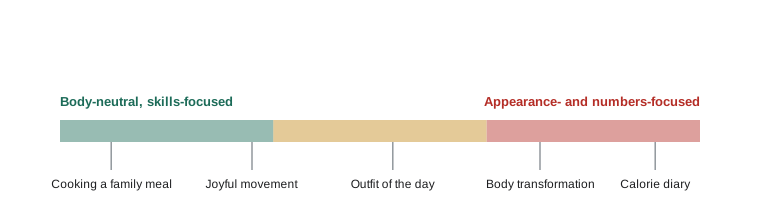
Food, fitness, fashion and beauty are among the most popular content categories, and much of that content is positive: cooking skills, joyful movement, self-expression. But appearance-focused content can also shape how viewers feel about their bodies, and for some it can contribute to disordered eating. Eating disorders have among the highest death rates of any mental illness, and they often begin in adolescence, the age group that spends the most time on social video. This lesson explains how content can affect body image, what eating-disorder-safe content looks like, how to handle filters and editing, how platforms treat this content, and how to choose sponsors responsibly. CRE-420 covered regulated claims for fitness and supplements; this lesson focuses on the wellbeing side.
This lesson discusses eating disorders in general terms. If food, eating or body image are difficult for you, support is available.
In the US, the National Alliance for Eating Disorders offers a helpline staffed by clinicians, and 988 is available at any time for a crisis.
How appearance content affects viewers
Researchers have studied the links between social media and body image for more than a decade. Findings are complex, but some patterns are consistent. Frequent exposure to idealized, edited images is associated with body dissatisfaction, especially when viewers compare themselves with people they see as similar to them, such as peers and relatable creators rather than distant celebrities. Recommendation systems can intensify this: a viewer who watches a few weight-loss videos may be shown more and more extreme content. Internal company research reported in 2021 suggested some teenage users felt worse about their bodies after using image-focused apps, and lawmakers and regulators in several countries have since focused on teen safety.
No single video causes an eating disorder. These illnesses arise from a mix of genetic, psychological and social factors. But content can add to risk for vulnerable viewers or help protect them, and creators have real influence over which.
What eating-disorder-safe content looks like
Eating disorder organizations and clinicians have described practices that reduce harm in content about food, bodies and exercise. They apply to everyone, not only creators who talk about eating disorders directly.
| Safer practice | Riskier practice |
|---|---|
| Focusing on how food tastes, how it is cooked and how meals bring people together | Labeling foods as good or bad, clean or toxic |
| Talking about how movement feels and what the body can do | Framing exercise as punishment or as "earning" food |
| Avoiding numbers such as weights, sizes and calorie counts | Sharing weights, measurements, calorie totals or "what I eat in a day" with tiny portions |
| Showing a variety of bodies without commentary on size | Before-and-after weight comparisons and body checking |
| Speaking about recovery in terms of feelings and support | Detailing behaviors, lowest weights or methods of restricting |
| Including resources when discussing eating disorders | Leaving viewers without a route to help |
Numbers deserve special mention. Weights, measurements and calorie counts invite comparison, and for people with eating disorders they can become targets. Many recovery-focused creators avoid them entirely, even when talking about their own past, and focus instead on emotions, relationships and what helped.
Talking about your own eating disorder
Creators in recovery who share their stories can help others recognize symptoms and seek help. The safe-messaging principles from lesson 6 apply: share from a place of stability, focus on feelings and recovery rather than behaviors, avoid numbers and body images from the worst periods, and include resources. Avoid presenting recovery as a simple, linear process or as a weight achieved; recovery is about relationships with food, body and self. Remember that viewers who are currently ill may seek out content that reinforces their illness, so ask whether any part of your story could be used that way.
Filters, editing and authenticity
Face and body filters, retouching and AI editing tools can change skin, faces and body shapes in seconds. When edited images are presented as real, they set impossible standards. Several countries have introduced rules requiring labels on retouched images in advertising; Norway, for example, has required a label on retouched body images in paid advertising since 2022, and France has required a label on commercial photos where bodies have been retouched since 2017. Canada and the US have no general law of this kind, but misleading advertising law applies when edits make claims about a product, such as a skincare product's results, as CRE-320 and CRE-420 explained.
- Do not apply body-reshaping or skin-smoothing filters when showing results of a product.
- Label edited or filtered images clearly, especially in sponsored or appearance-focused content.
- Consider regularly showing unfiltered, unposed content to balance the feed.
- Never edit images of children to change their bodies or faces.
Worked problem
Auditing a feed for appearance focus
A lifestyle creator reviews their last 40 posts and tags each as appearance-focused (body, weight, skin or outfit as the main subject), mixed, or not appearance-focused. They find 22 appearance-focused, 10 mixed and 8 not. They want appearance-focused posts below 40 % over the next quarter. What share are they at now, and how many of the next 40 posts can be appearance-focused?
Show solution
- Current share: \( 22 \div 40 = 55 \% \).
- Target below 40 % of 40 posts: fewer than 16 posts, so at most 15.
- The creator plans at most 15 appearance-focused posts, filling the rest with skills, stories and behind-the-scenes content.
Answer: They are at 55 % and can plan at most 15 appearance-focused posts out of the next 40. A simple tally makes an abstract goal concrete.
Comments and community
Comments on appearance content often include body comments, both negative and positive. Even compliments about weight loss can reinforce harmful ideas for viewers. Creators can set community norms, such as asking viewers not to comment on bodies, add filters for weight and size terms and harmful phrases, and remove comments that promote restriction or offer dangerous tips. Communities that promote eating disorders sometimes use coded terms; platforms monitor these, and creators should report concerning accounts rather than engage with them.
Worked problem
Sizing a comment filter list
A creator's videos receive 5,000 comments a month. In a sample of 200, 14 contain comments about weight or body size. If a filter catches about 80 % of such comments, how many will be caught and how many will slip through each month?
Show solution
- Rate in sample: \( 14 \div 200 = 7 \% \).
- Expected body comments per month: \( 0.07 \times 5{,}000 = 350 \).
- Caught: \( 0.8 \times 350 = 280 \); slipping through: 70.
Answer: About 280 caught and 70 for manual moderation each month. The filter helps, but human review is still needed.
Platform policies
Platforms have tightened rules on eating disorder content since the early 2020s. Most remove content that promotes or encourages disordered eating, shares tips for restricting, or glorifies very low weights, and many age-restrict or reduce recommendations of content that discusses eating disorders even in a recovery context. YouTube, for example, updated its eating disorder policy in 2023 to remove content that shows or encourages imitable disordered behavior and to age-restrict some recovery content. Ad policies are also strict: platforms commonly restrict weight-loss product ads to adults and ban some products outright. Creators should read each platform's policies on eating disorders, self-harm and weight-loss ads before making related content.
Choosing sponsors responsibly
Appearance and wellness creators are offered many deals for diet products, supplements, teas, appetite suppressants, cosmetic procedures and body-shaping garments. Some are harmless, some make unlawful claims and some can harm vulnerable viewers.
| Question | Concern |
|---|---|
| Does the product promise weight loss or body change? | High risk for young and vulnerable viewers; strict ad rules |
| Would I need to show before-and-after images or numbers? | Body comparison and numbers increase harm |
| Is my audience substantially under 18? | Many platforms and codes restrict such ads to adults |
| Does it make health claims that need substantiation under FTC rules? | Legal risk for the creator, as CRE-420 explained |
| Does the brand respect my eating-disorder-safe practices? | A brief that conflicts with them is a reason to decline |
Declining a sponsor can cost money, but it protects the audience's trust and the creator's own values. Many creators publish a short list of product categories they do not promote, which saves time when brands approach them.
Children, teens and food content
Family food content reaches children and teenagers directly, and the way adults talk about food and bodies in front of children shapes how children think about their own. Commenting on a child's body, praising or criticizing how much they eat, or presenting foods as forbidden can all contribute to an unhealthy relationship with food. Good practice for family channels is to let children enjoy food without commentary on their size or appetite, avoid diet talk in front of them, and never film children being weighed or measured. Teenage viewers are at the age when eating disorders most often begin, so creators whose audience includes many teens should be especially careful with appearance-focused trends, such as challenges about body shape or extreme food restriction.
If a viewer seems to be struggling
Viewers sometimes comment or message that they are restricting food, bingeing or purging, or that a creator's content has made them feel worse about their body. Respond with care and without judgment, avoid giving any diet or weight advice, and point them to support. For a crisis, give the national crisis line; for ongoing help, eating disorder organizations offer helplines, chat services and directories of treatment. If a viewer appears to be in immediate danger, encourage them to call emergency services and use the platform's reporting tools. Prepare a template reply, as for other mental health concerns, so moderators can respond quickly and consistently.
Fitness and wellness content
Fitness content can encourage healthy movement, but some patterns raise risks: framing workouts as ways to burn off food, promoting extreme training without rest, showing visible ribs or abs as goals, or using phrases such as "no excuses" that shame people who cannot exercise. Responsible fitness creators emphasize strength, enjoyment, rest and variety, adapt workouts for different abilities and bodies, and encourage viewers to consult a professional before starting intense programs.
Remember too that your own relationship with food and your body shows in your content. Creators who are struggling themselves deserve support first; CRE-350 discussed looking after your own wellbeing.
Common mistakes
MistakeSharing weights, measurements or calorie counts.
InsteadAvoid numbers and focus on feelings, skills and wellbeing.
MistakeLabeling foods as good or bad.
InsteadTalk about taste, cooking and connection instead of moral labels.
MistakeUsing reshaping or smoothing filters on product results.
InsteadShow results unfiltered and label edited images.
MistakeComplimenting weight loss in comments or replies.
InsteadSet norms against body comments and filter weight and size terms.
MistakeAccepting weight-loss sponsors for a young audience.
InsteadScreen sponsors and decline products that conflict with safe practices.
Summary and key terms
- Appearance content can increase or reduce risk for viewers vulnerable to eating disorders.
- Comparisons with relatable peers and recommendation spirals can intensify body dissatisfaction.
- Eating-disorder-safe content avoids numbers, moral food labels and exercise as punishment.
- Recovery stories should focus on feelings and support, not behaviors or weights.
- Filters and editing should be labeled and never used on product results or children.
- Platforms remove content promoting disordered eating and restrict weight-loss ads.
- Responsible sponsorship screening protects vulnerable viewers and audience trust.
- Body image
- How a person thinks and feels about their body.
- Body dissatisfaction
- Negative feelings about one's body or appearance.
- Disordered eating
- Unhealthy eating behaviors that may or may not meet criteria for an eating disorder.
- Body checking
- Repeatedly checking one's body size or shape, often shown in content.
- Body neutrality
- An approach focusing on what the body does rather than how it looks.
- Retouching
- Editing an image to change appearance.
- Recommendation spiral
- A recommendation system serving increasingly extreme content on a topic.
- Before-and-after image
- A comparison showing appearance before and after a change.
- Appearance-focused content
- Content in which the body, weight, skin or outfit is the main subject.
- Community norm
- An expectation for behavior that a creator sets for their audience.
Practice problems
Work each problem on paper first, then reveal the answer to check.
Why are relatable creators potentially more influential on body image than celebrities?
Show answer
Viewers compare themselves more with people they see as similar.
Name three eating-disorder-safe practices.
Show answer
Avoid numbers, avoid moral food labels, focus on how movement feels, show varied bodies, include resources.
Why avoid sharing weights even about your past?
Show answer
Numbers invite comparison and can become targets for people who are ill.
Since when has Norway required labels on retouched body images in ads?
Show answer
2022.
30 of 50 posts are appearance-focused. What share is that?
Show answer
60 %.
A sample of 100 comments has 5 body comments; 4,000 comments a month. Expected body comments?
Show answer
200.
Name two things platforms do with eating disorder content.
Show answer
Remove promotion of disordered eating, age-restrict recovery content, limit recommendations, restrict weight-loss ads.
Name two sponsor screening questions.
Show answer
Does it promise weight loss? Before-and-after images? Young audience? Health claims? Conflicts with safe practices?
Name a US eating disorder support organization.
Show answer
The National Alliance for Eating Disorders.
Why can weight-loss compliments in comments be harmful?
Show answer
They reinforce the idea that weight loss is praiseworthy, which can harm vulnerable viewers.
Lesson quiz · 5 questions
Score 60% or more to complete this lesson.
Create a free account to save your progress, take quizzes and earn a certificate.